Wall Street Corridor Improvements

The Wall Street area has long served as the commercial hub of Norwalk, CT, which is home to more than 90,000 residents. This coastal city was devastated by a flood in 1955, which destroyed many area businesses. Over the past decade, there has been a local commercial resurgence; however, the existing transportation infrastructure cannot support redevelopment.
To revitalize Norwalk’s city center while expressing the City’s culture and community, the City recognized the need to implement a more comprehensive and balanced transportation system – one that prioritizes safety and multimodal accessibility.
The City, the Norwalk Redevelopment Agency, and the Regional Plan Association commissioned a study of the area entitled the “Wall Street-West Avenue Neighborhood Plan.” Based on extensive stakeholder engagement, this study included a series of recommendations for infrastructure investments to make the Wall Street neighborhood more accessible by transit, foot, bike, and car. This study forms the foundation of the Wall Street Corridor Improvement Project, which is a unique opportunity to deliver a comprehensive, complete streets design across multiple roadways through a strategic, phased approach .
The City’s Transportation, Mobility and Parking (TMP) department had a limited budget for this project. Understanding our client’s desire to transform this area, we identified elements of the design scope that, if expanded, would create opportunities for additional funding sources and enhanced project benefits.
Fuss & O’Neill developed and generated preliminary (yet comprehensive) cost estimates to support funding applications. Further leveraging state and federal grants, this project secured the following funds: $9.5M from the Local Transportation Capital Improvement Program (LOTCIP); $800,000 from the Community Connectivity Grant Program (CCGP) a $3.5M State Urban Action Grant; $6M via the Department of Economic Community Development’s Community Investment Fund (CIF); and $5.5M in federal appropriations.
Fuss & O’Neill’s landscape architects, planners, public outreach specialists, and transportation engineers designed a customized community engagement process to gather feedback. This program resulted in a consensus-backed design for this key area of historic Norwalk.
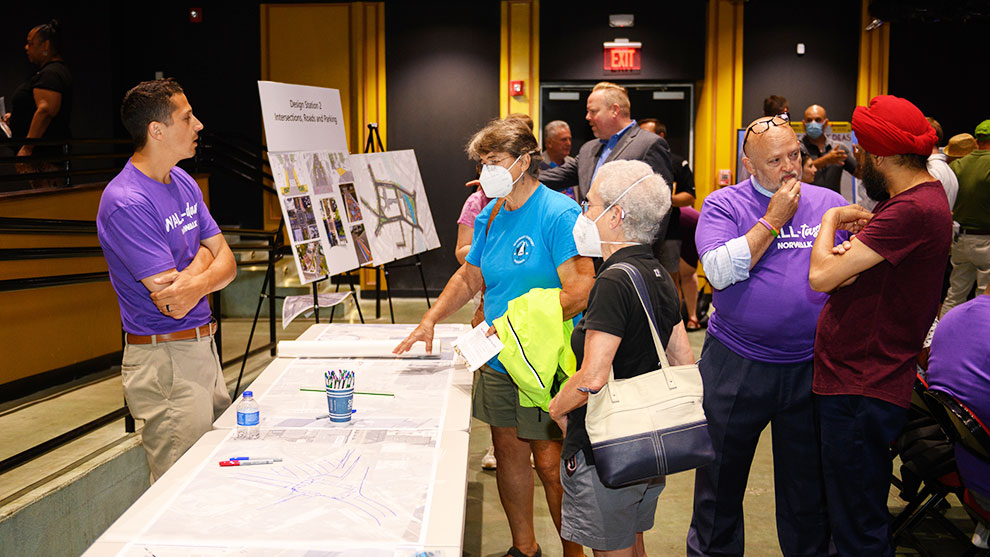
A centerpiece of the engagement process was the creation and facilitation of two large community charrettes that involved more than 600 participants. At these events, project stakeholders and the public provided feedback that informed the design of streetscape enhancements, bicycle lanes, pedestrian accessibility, and connectivity to local businesses, event spaces, and downtown areas.
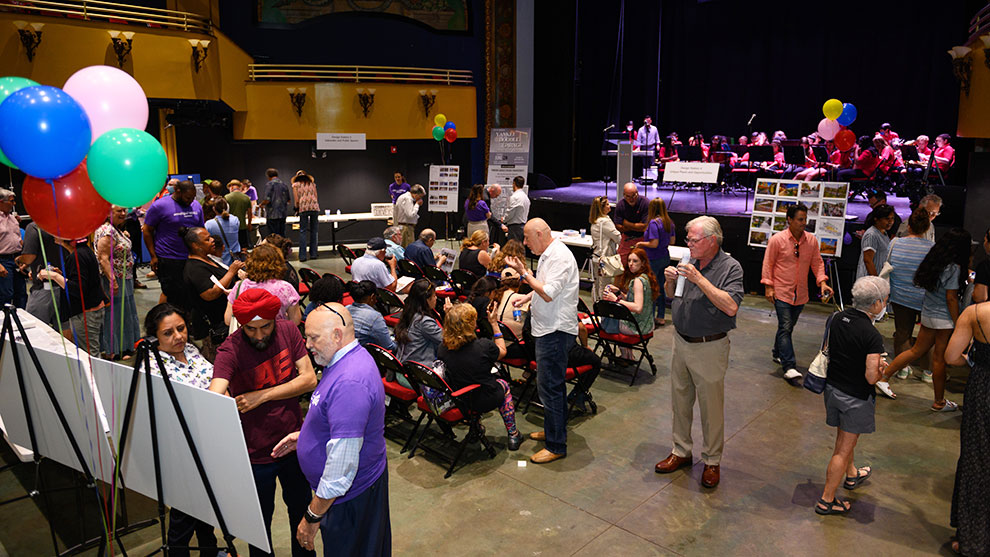
This first charrette was held at the 111-year-old Wall Street Theater, which is situated in the middle of the project area. More than 350 participants and stakeholders attended, including the City’s mayor, local council members, and state legislators.
Interactive design stations with photographs, maps, and graphics were arranged around the room’s perimeter. Each station was hosted by a facilitator who helped to generate ideas and who answered questions. Community members were encouraged to sketch out ideas, highlight concerns, and record what they would like to see in the area. Several neighborhood vendors were in attendance to support the community-focused theme of the event.
The project team compiled and assessed the public input from the first charrette. This feedback informed the conceptual design. At the second charrette, which was held at the Norwalk Public Library, our team presented the proposed design. Design team members collaborated with the public at four separate design stations that were focused on: the overall concept plan; inspections, roads, and parking; sidewalks and public spaces; and gathering spaces and trail connectivity. Community input from the second charrette was then used to develop the project’s final design.
Engagement with the Norwalk economic and residential communities is ongoing.
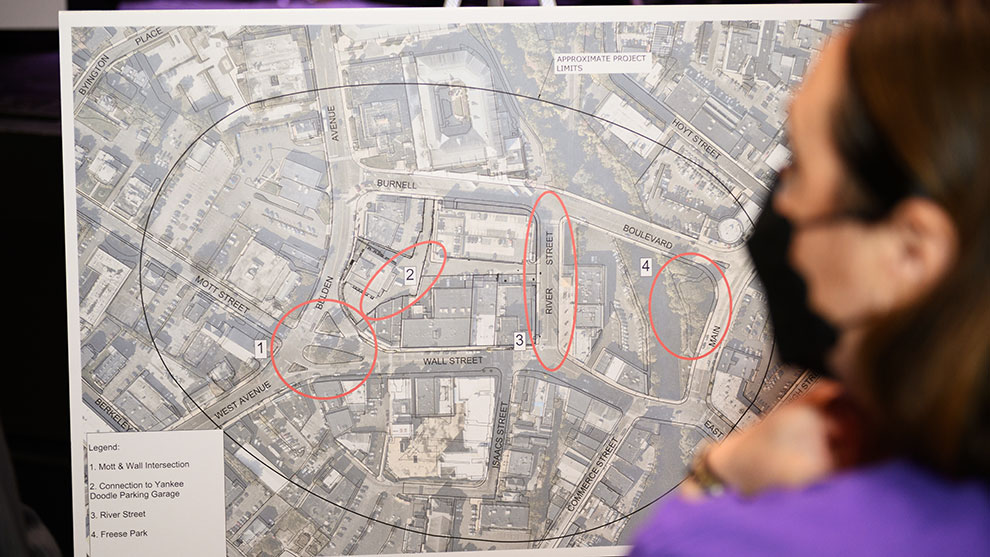
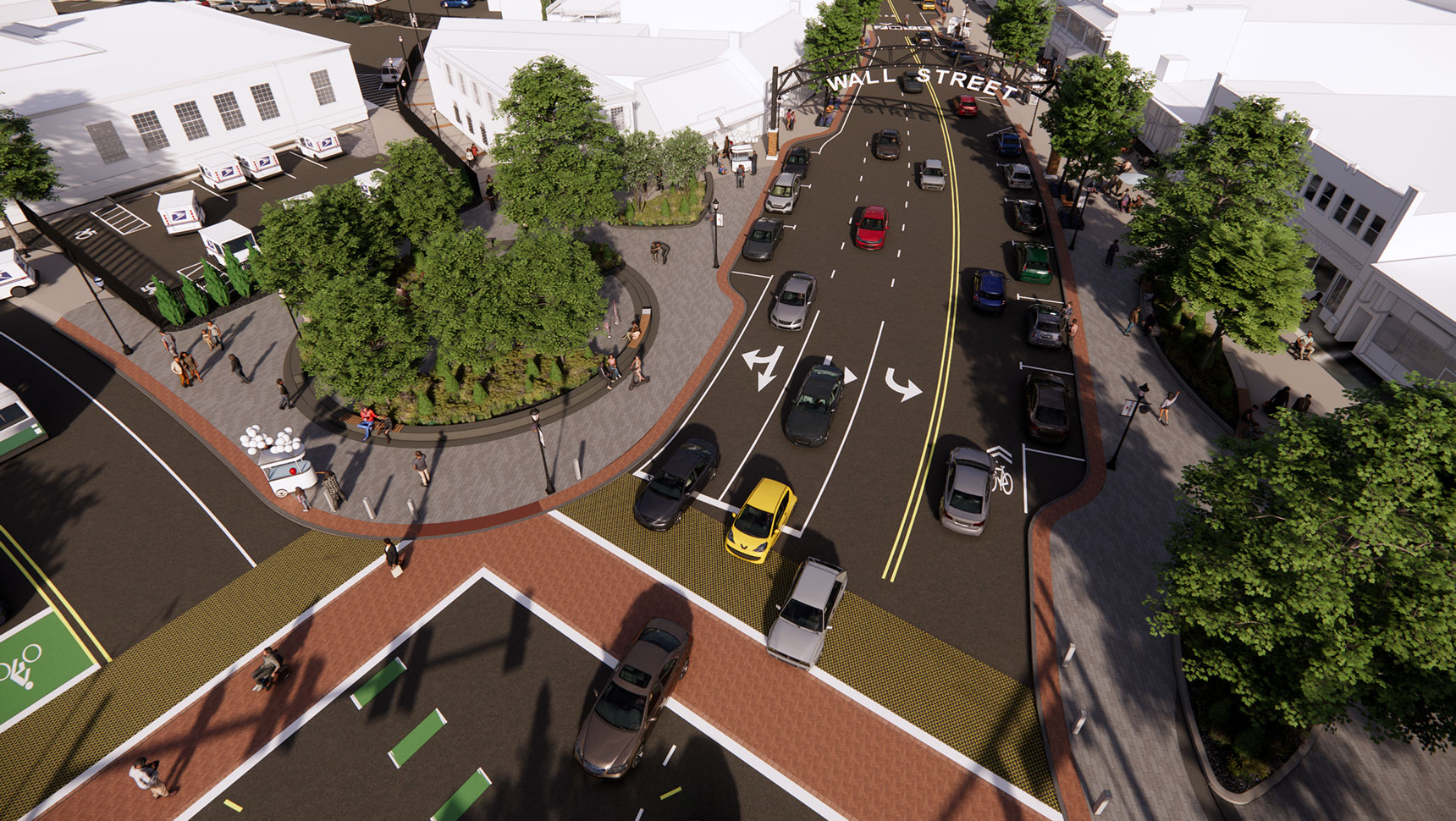
Creating safer intersections and enabling greater access to the project area have been critical components of the traffic and transportation design.
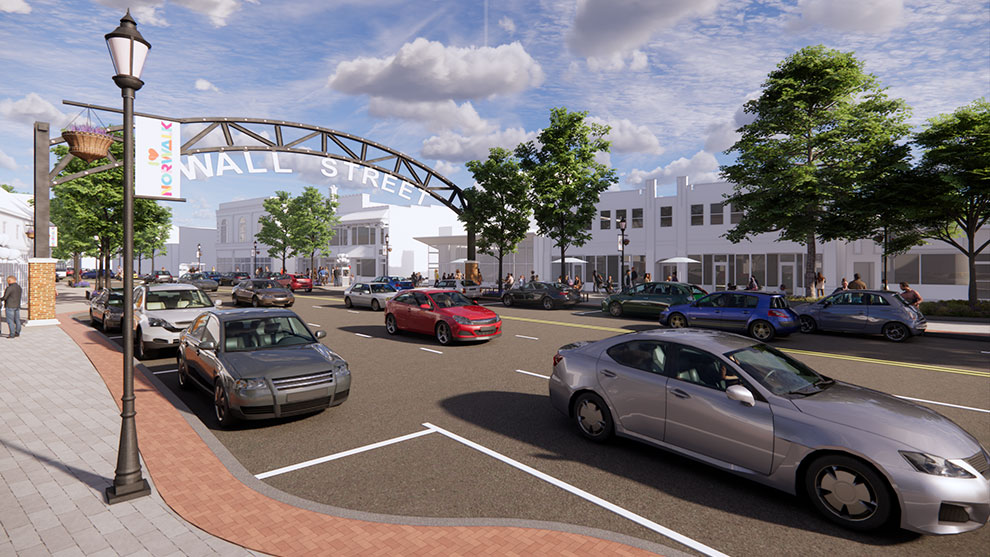
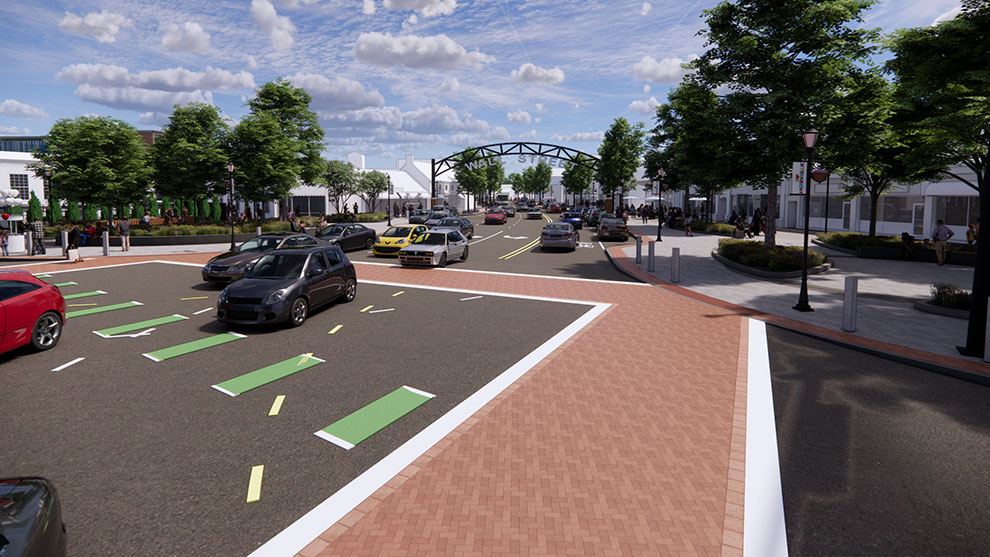
To slow vehicle speeds, the corridor design includes three raised intersections, two raised crosswalks, and a collection of bump outs and road diet features.
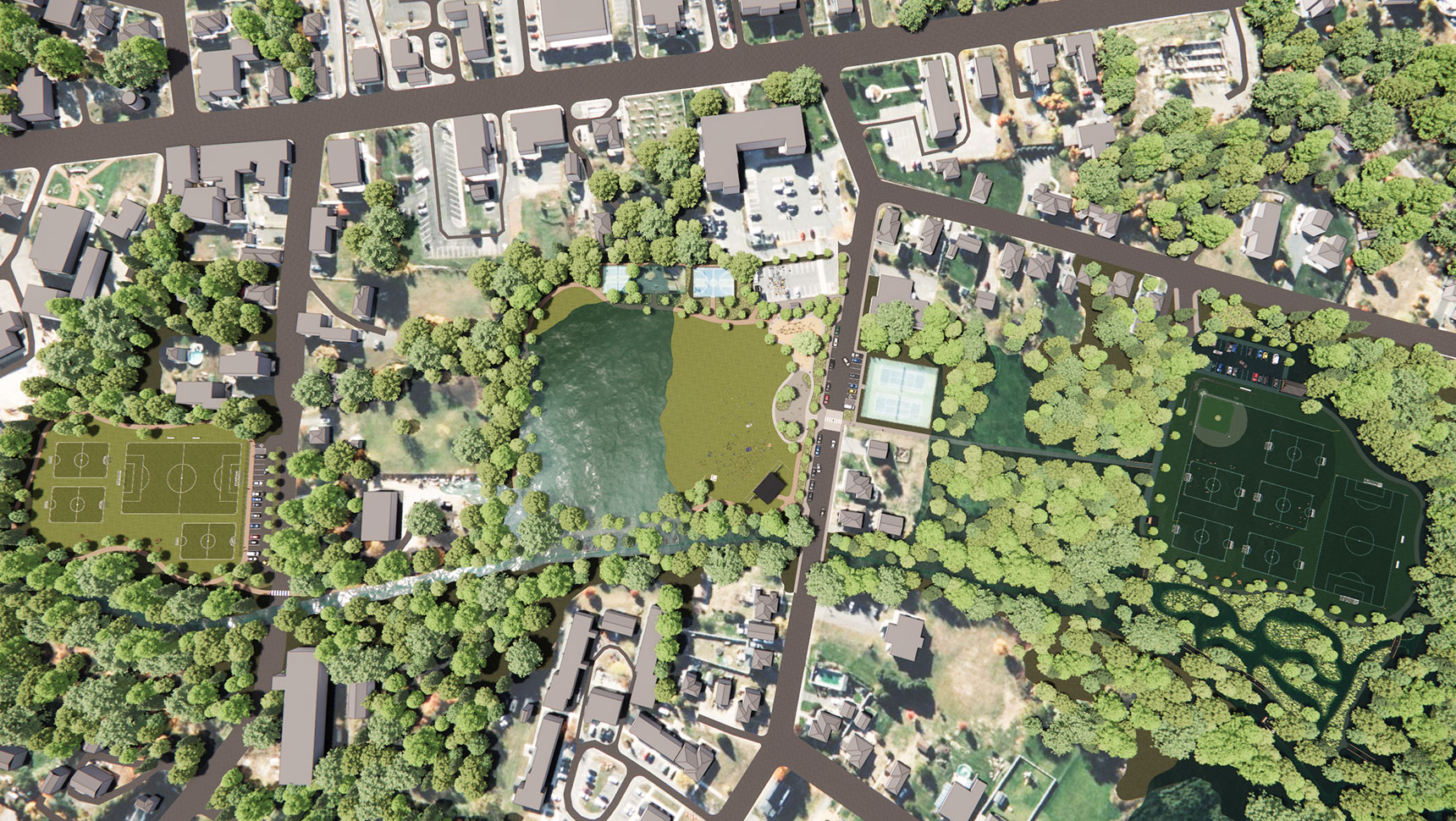
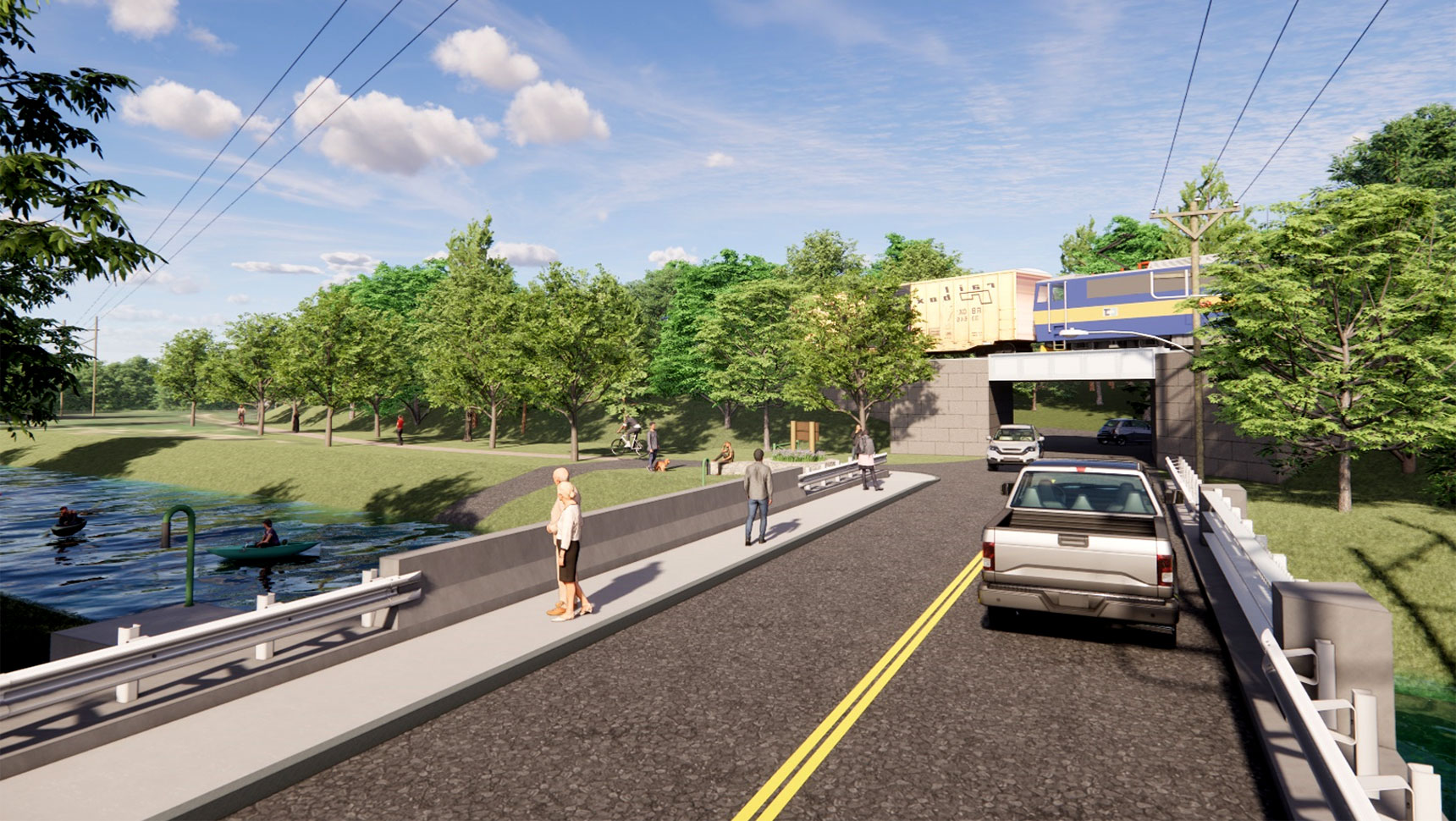
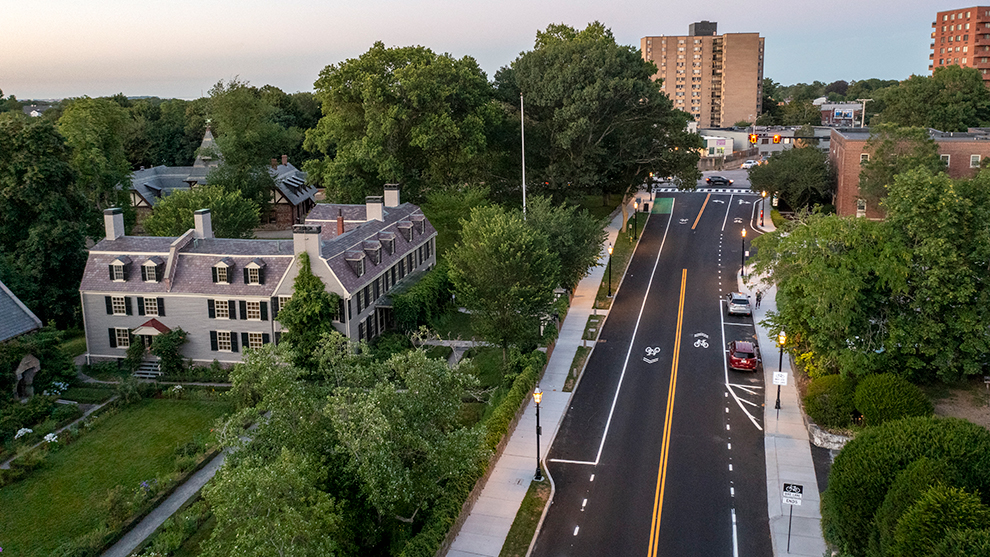
The design seeks to enhance connectivity to citywide bike routes and walking trails. The addition of bike lanes and shared use travel lanes will create greater connectivity to the City’s trail system, which includes the Norwalk River Valley Trail and the Harbor Loop Trail.
Maximizing the use of existing public parking resources, which includes improved on-street parking and a shared parking plan with a local post office facility, is a critical element of the design. The Norwalk transit bus hub on Burnell Boulevard will be converted from a one-way roadway to a two-way roadway. By turning existing angled spaces to parallel parking, the design will increase parking opportunities in this busy area.
A six-lane intersection approach into Wall Street is being converted into a welcoming gateway that will feature pedestrian urban plazas. These will serve as a gateway to the downtown core and will establish social gathering areas. By shifting bicycle routes to the transit hub corridor of Burnell Boulevard, the resulting wider sidewalks will provide easier access to businesses along the corridor. The conversion of River Street into a shared street will allow for greater foot traffic and more frequent community events.
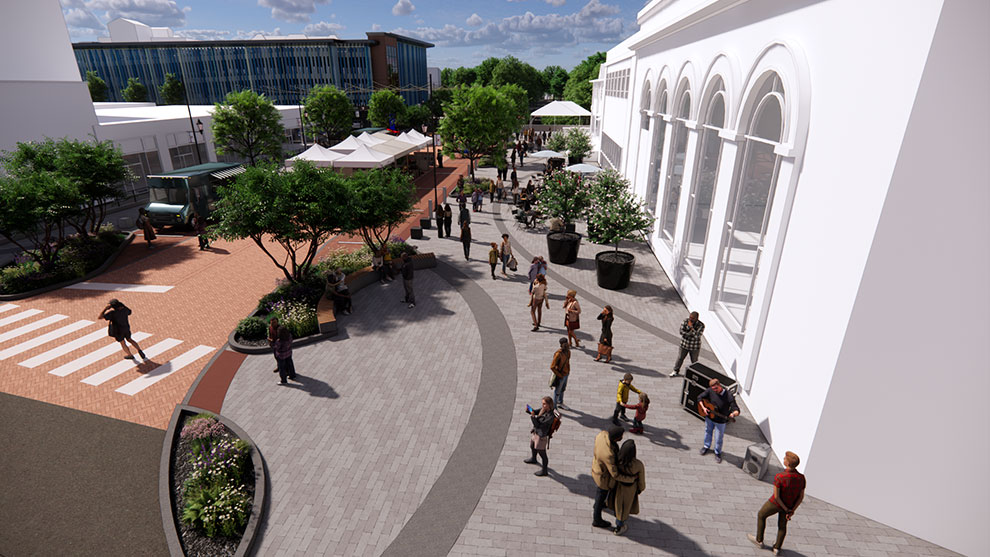

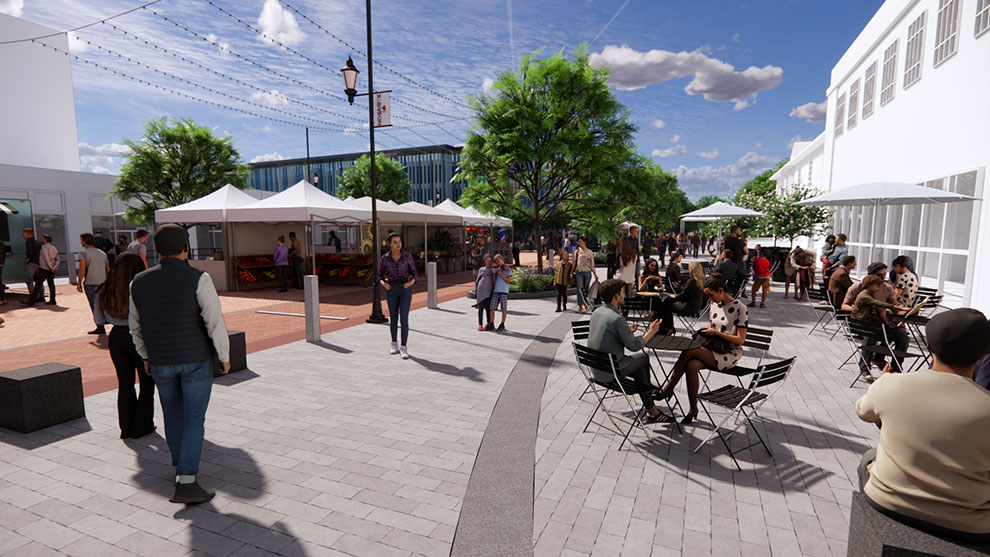
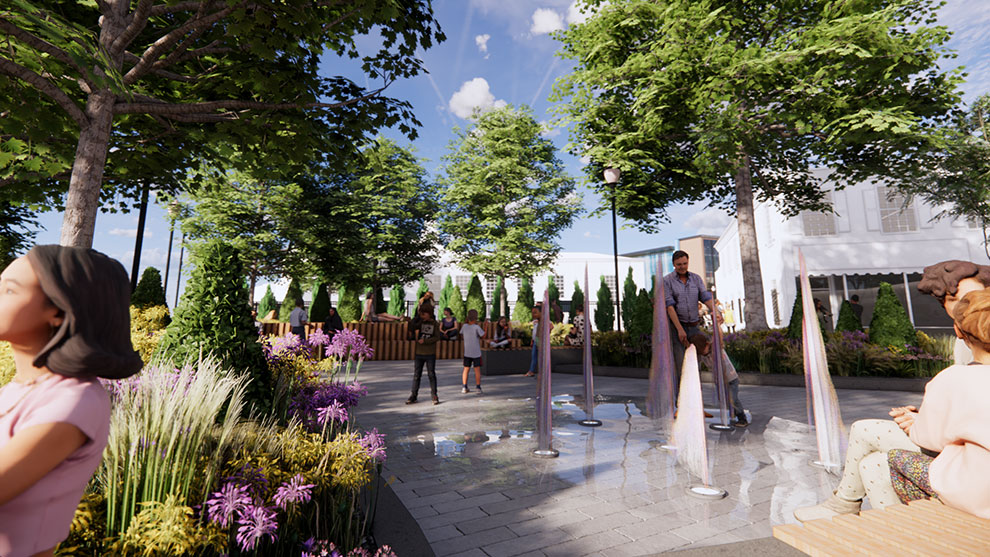
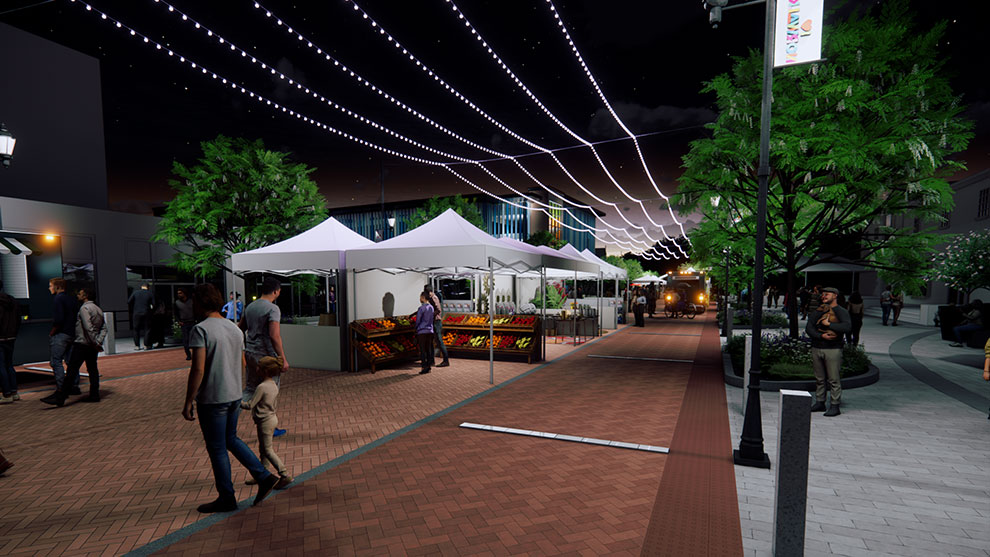
Robust street tree plantings with ground cover will contribute to cooling corridors and to tree health longevity. The trees will provide a sense of place and will soften the urban environment.
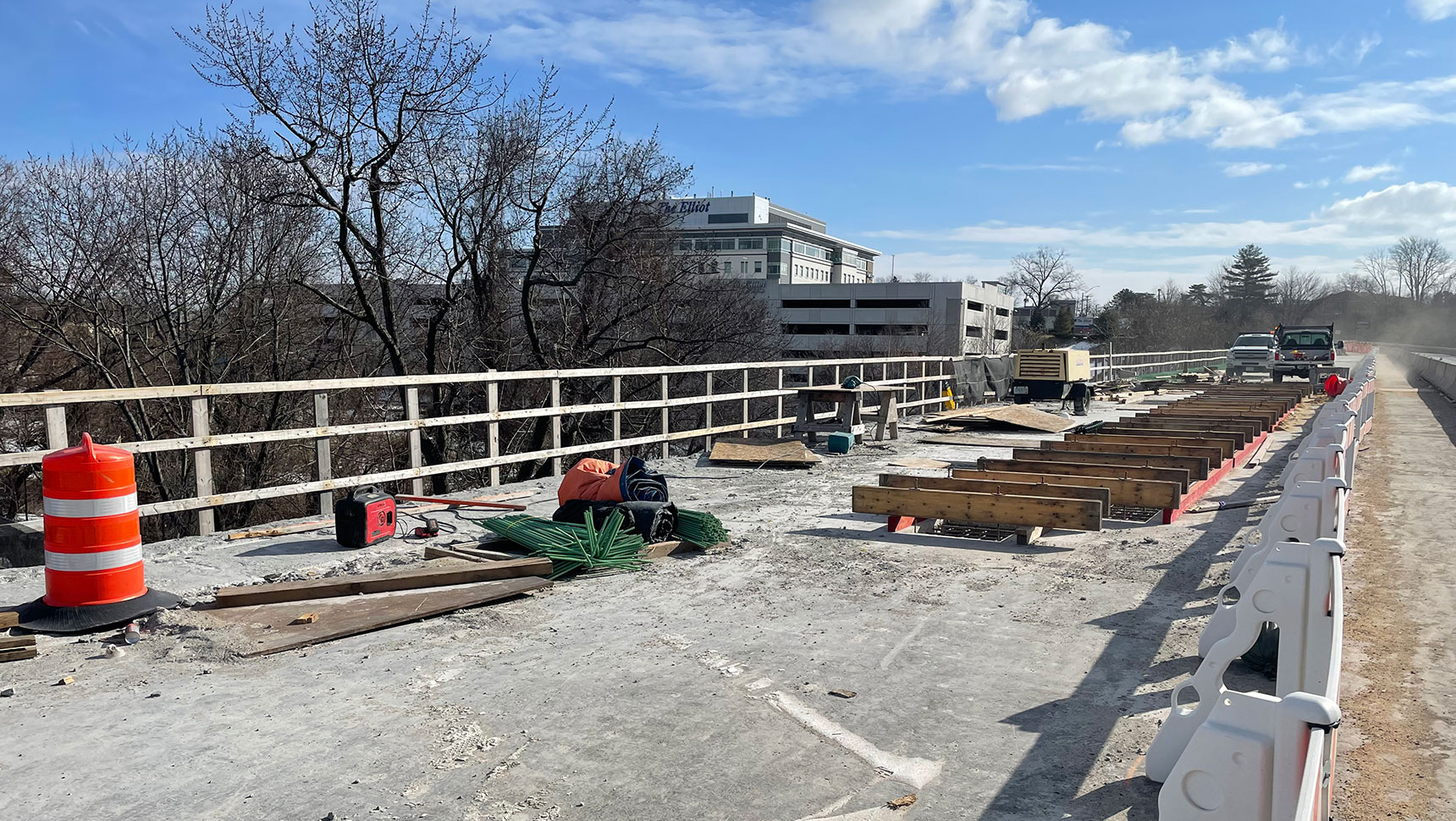
Fuss & O’Neill is supporting this project from concept design through permitting and construction. The Master Plan is attracting new business owners. Since the introductory charette, new restaurants have opened, the Norwalk Conservatory of the Arts has moved to Wall Street, and the historic Wall Street theater has seen increased attendance. Phase 1 of the project is currently under construction.