Beyond the Sign: Building a Complete Strategy to Prevent Wrong-Way Driving
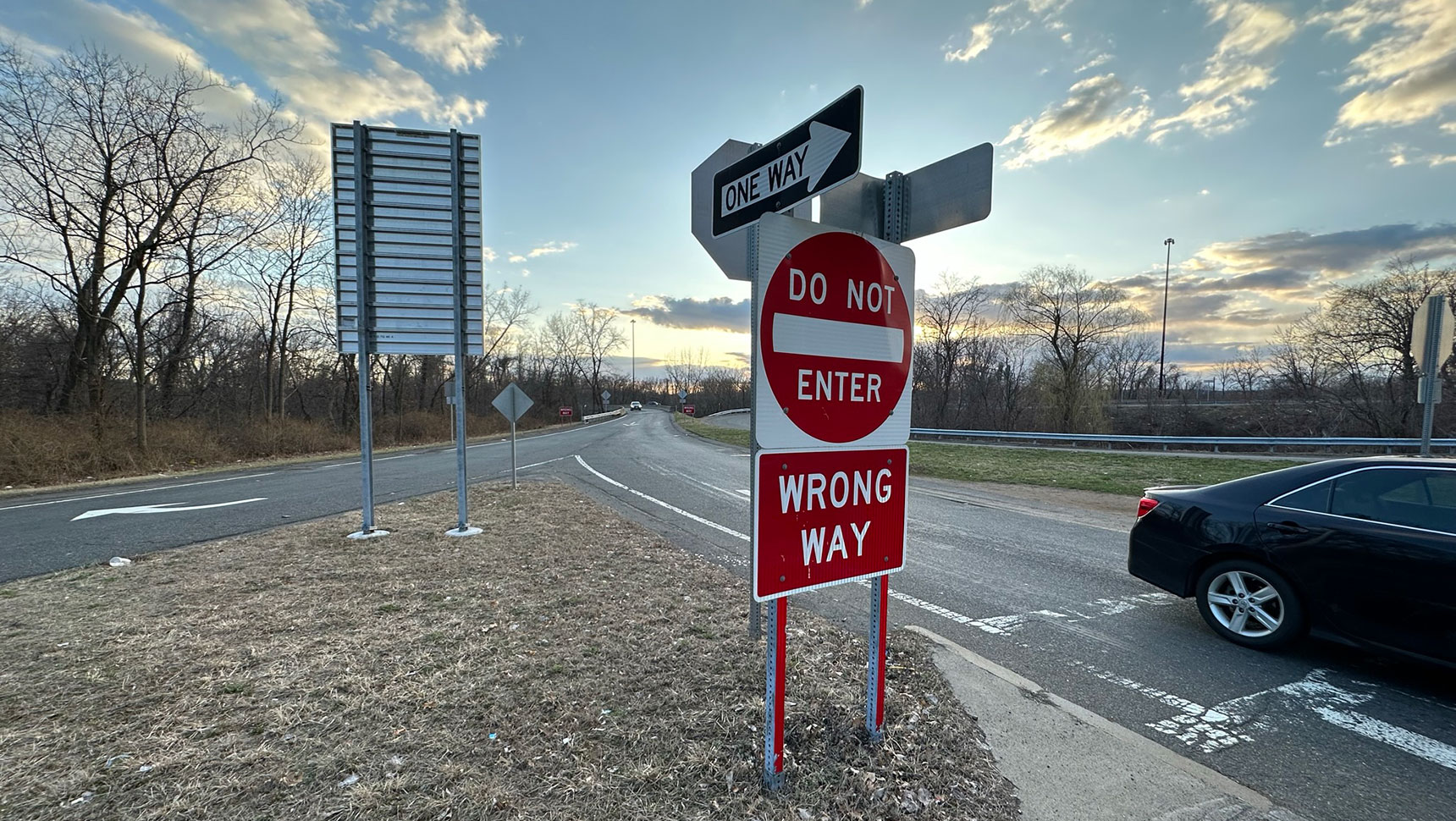

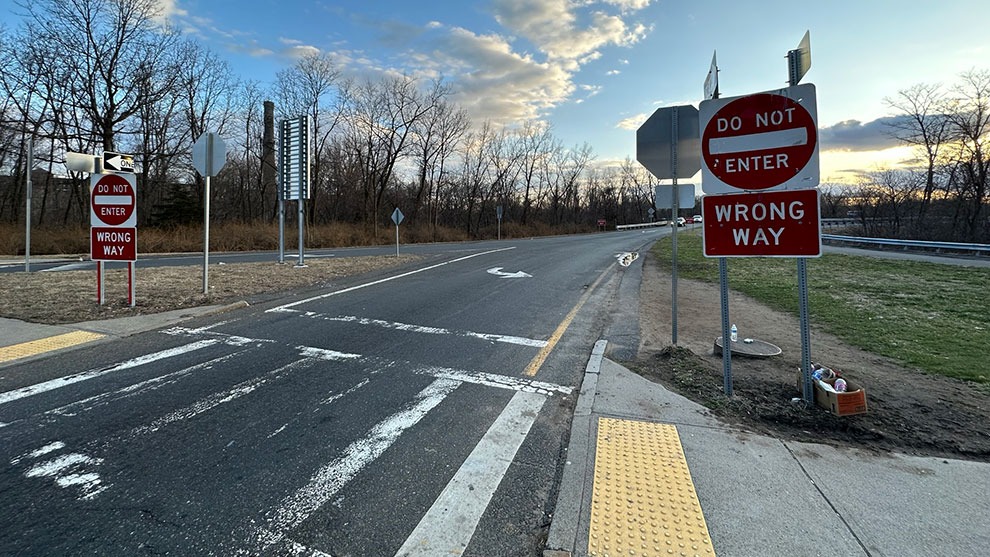
Wrong-way driving incidents may occur more frequently than available data suggests, as many go undetected or unreported unless they result in a crash—and when crashes do occur, they are significantly more likely than other highway crashes to result in fatalities or serious injuries. Preventing them requires more than installing static WRONG WAY signs. Transportation agencies need a coordinated strategy that addresses where incidents are most likely to occur, why drivers become confused, how quickly they can be warned, and what happens when a vehicle continues in the wrong direction.
Through our work supporting the Connecticut Department of Transportation and Massachusetts Department of Transportation, Fuss & O’Neill has helped advance wrong-way driving prevention from research and risk analysis through field evaluation, system design, and implementation.
Our experience has shown us that the most effective programs combine data, roadway design, technology, and transportation operations rather than relying on any single countermeasure, an integrated strategy that reflects the principles of the Safe System Approach.
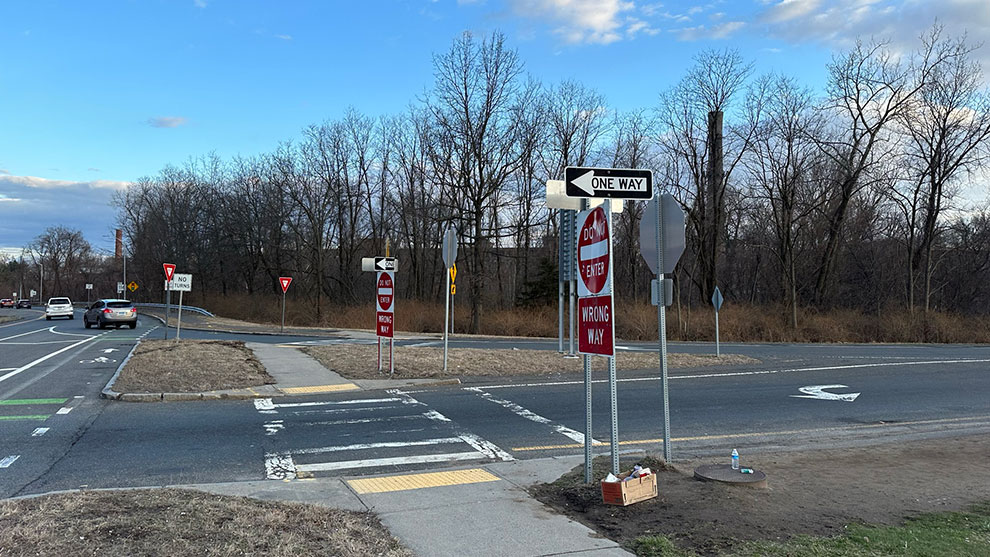
Wrong-way driving risk is not distributed evenly across a highway network. Ramp configuration, lighting, driver visibility, nearby land uses, traffic volumes, and previous incidents can all influence the likelihood of a wrong-way movement.
A statewide program must begin by identifying the locations where improvements will have the greatest potential benefit. Depending on the available data, that evaluation may consider:
The analysis must also account for data limitations. Wrong-way movements that do not result in crashes may never appear in traditional crash databases. Reports from law enforcement, transportation operations centers, detection systems, and the public can help create a more complete picture.
Data can identify potential risk, but it cannot replace field investigation.
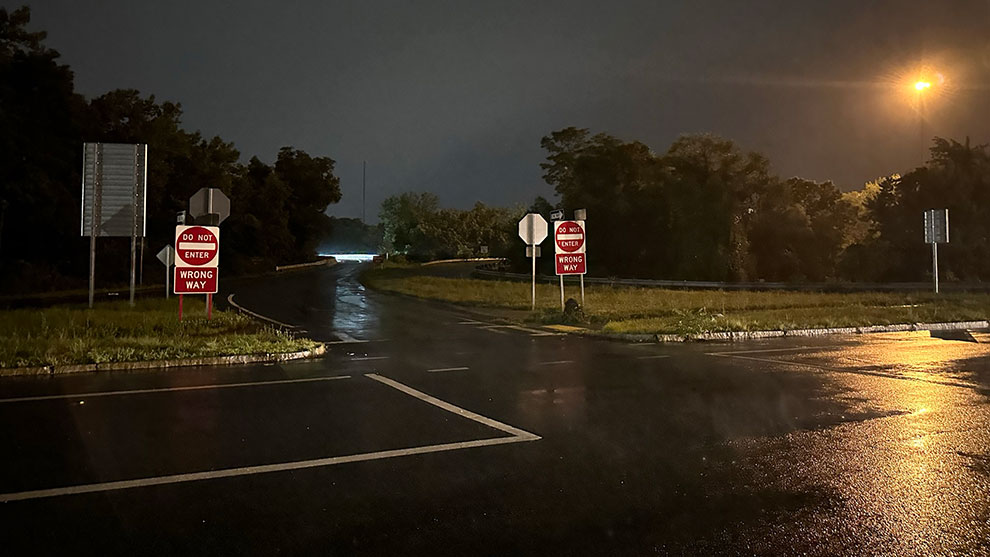
As part of a MassDOT wrong-way guidance study, Fuss & O’Neill researched countermeasures and conducted daytime and nighttime evaluations at more than 70 interchanges in Districts 1 and 2. The work examined existing signs, pavement markings, lighting, visibility, traffic control, and interchange geometry.
Daytime and nighttime reviews often tell different stories. A ramp that appears straightforward during the day may become confusing when pavement markings are worn, signs compete with nearby lighting, or the intended travel path is not visually apparent.
Field investigations help agencies understand what drivers actually see, and provide the foundation for practical, site-specific recommendations.
Not every location requires an automated detection system. In many cases, relatively low-cost improvements can make the correct travel path more obvious and prompt a driver to recognize a mistake before entering the highway.
Potential treatments include:
The appropriate combination depends on the interchange configuration and the level of risk. Fuss & O’Neill’s work for MassDOT included development of a guidance matrix differentiating between broadly applicable best practices and supplemental treatments for specific roadway conditions.
This allows agencies to establish consistency across a statewide program without applying the same solution at every location.
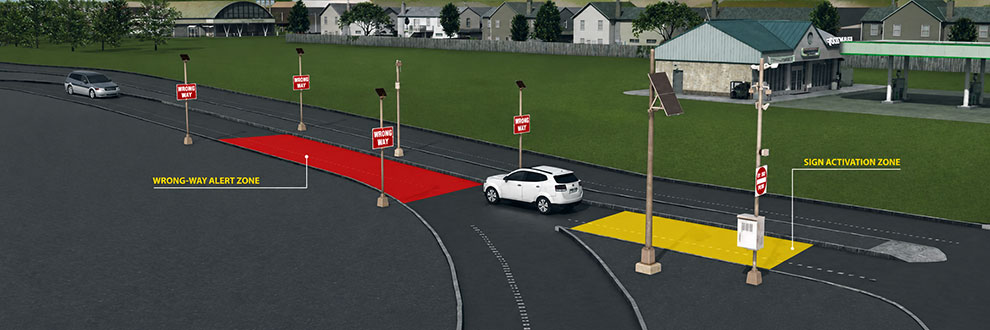
The first objective of a wrong-way warning system is to stop the movement before the vehicle reaches the highway.
CTDOT’s program uses detection and confirmation zones to identify a wrong-way vehicle and activate conspicuous warnings, including LED-enhanced signs and other active devices. Internal program analysis found that approximately 80% of confirmed wrong-way drivers self-corrected after encountering an activated warning system.
That performance illustrates why placement, visibility, timing, and driver expectancy are as important as the detection technology itself. The system must recognize the movement, attract the driver’s attention, communicate the danger immediately, and provide space to stop or turn around safely.
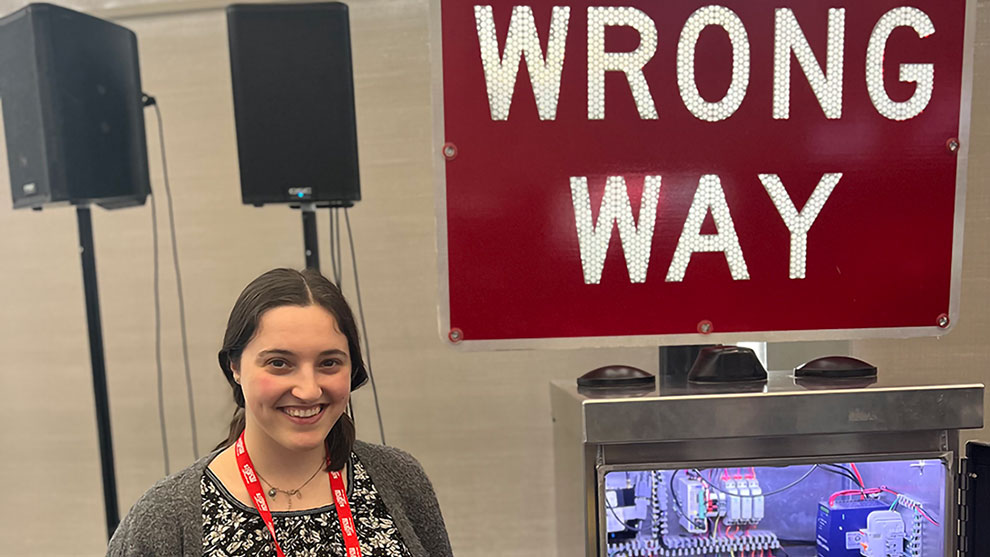
Some drivers will not self-correct, so a complete system must extend beyond the roadside warning.
Detection systems can be integrated with transportation operations and law enforcement notification platforms, allowing confirmed events to be communicated quickly to those responsible for responding. CTDOT’s experience also demonstrates why response strategies must be evaluated carefully. The agency tested variable message signs as a way to warn approaching motorists, but the signs led some drivers to stop along the highway for extended periods, creating an unintended safety concern. As a result, that measure was discontinued.
Today, when a detected wrong-way driver continues traveling, CTDOT’s Highway Operations Center and Connecticut State Police are notified simultaneously so the risk can be addressed as quickly as possible.
These operational protocols should be established during planning and design—not after the equipment is installed.
Agencies need to define:
Fuss & O’Neill’s wrong-way driving experience spans multiple stages of program development.
For CTDOT, our work has included the design of wrong-way detection and warning systems at high-risk highway ramps in multiple districts, including traffic, structural, electrical, utility, communications, and construction-phase coordination. Our team has also supported statewide crash analysis, countermeasure evaluation, system-performance reporting, and recommendations.
For MassDOT, Fuss & O’Neill developed statewide guidance informed by research and field evaluations at more than 70 interchanges. Our current work is helping MassDOT advance a data-driven approach to prioritizing ramp locations and developing scalable, quick-build improvement concepts.
Together, these assignments provide a valuable perspective: statewide consistency and site-specific engineering must work together.
Wrong-way driving will not be solved by one sign, one sensor, or one dataset. Meaningful risk reduction comes from understanding the roadway, selecting the right combination of treatments, coordinating the operational response, and continuing to learn from every detected event.
Is your agency evaluating interchange safety or developing a wrong-way driving prevention program? Contact Fuss & O’Neill to discuss risk assessment, field evaluation, countermeasure selection, system design, and implementation.
Gina is a Senior Traffic Engineer in Fuss & O'Neill's Transportation Business Unit with experience in traffic analysis, roadway safetey, traffic modeling, and transportation design. She has worked on projects for municipalities, private clients, and CTDOT, including the implementation of Wrong-Way Driving detection and warning sytems, helping improve roadway safety and reduce the risk of severe crashes.
Katherine is a Senior Transportation Engineer in Fuss & O'Neill's Transportation Business Unit with experience in signal design, traffic impact analyses, roadway design, transit planning, traffic calming, and safety projects. She has worked with municipalities and state agencies throughout the region, including MassDOT, CTDOT, and VTrans, giving her a strong understanding of agency procedures and project delivery requirements.
We keep up-to-date on developing technologies, emerging concerns, climate projections, and new regulations. Subscribe to be the first to know how these ever-changing industry topics impact you and how we’re responding.
"*" indicates required fields