
Bruce Freeman Rail Trail

Fuss & O’Neill provided multidisciplinary design services for a 4.4-mile extension of the Bruce Freeman Rail Trail (BFRT), which is a segment of a proposed 25-mile trail along the former Lowell Secondary Track right-of-way of the Old Colony Railroad. This extension into Sudbury extends the total completed miles of the BFRT to 19.
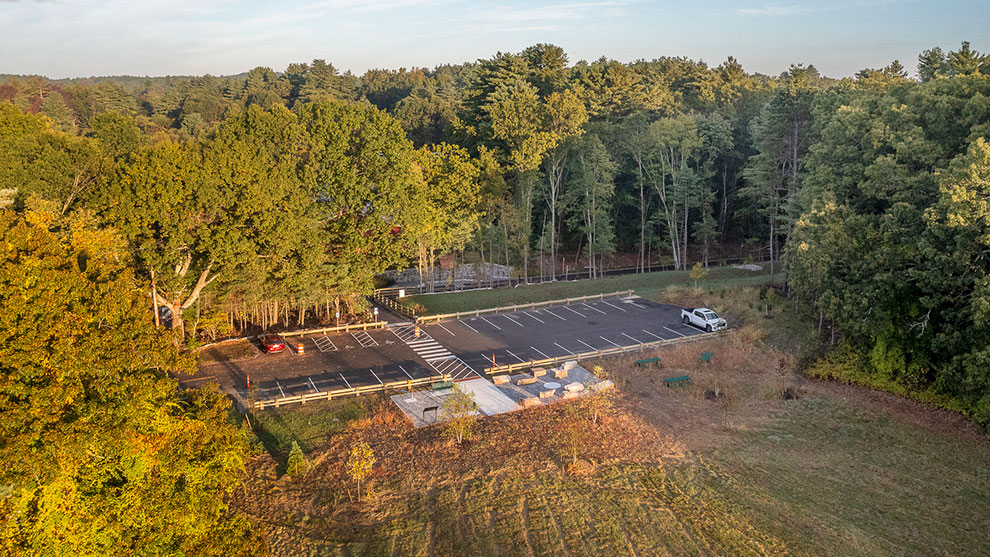
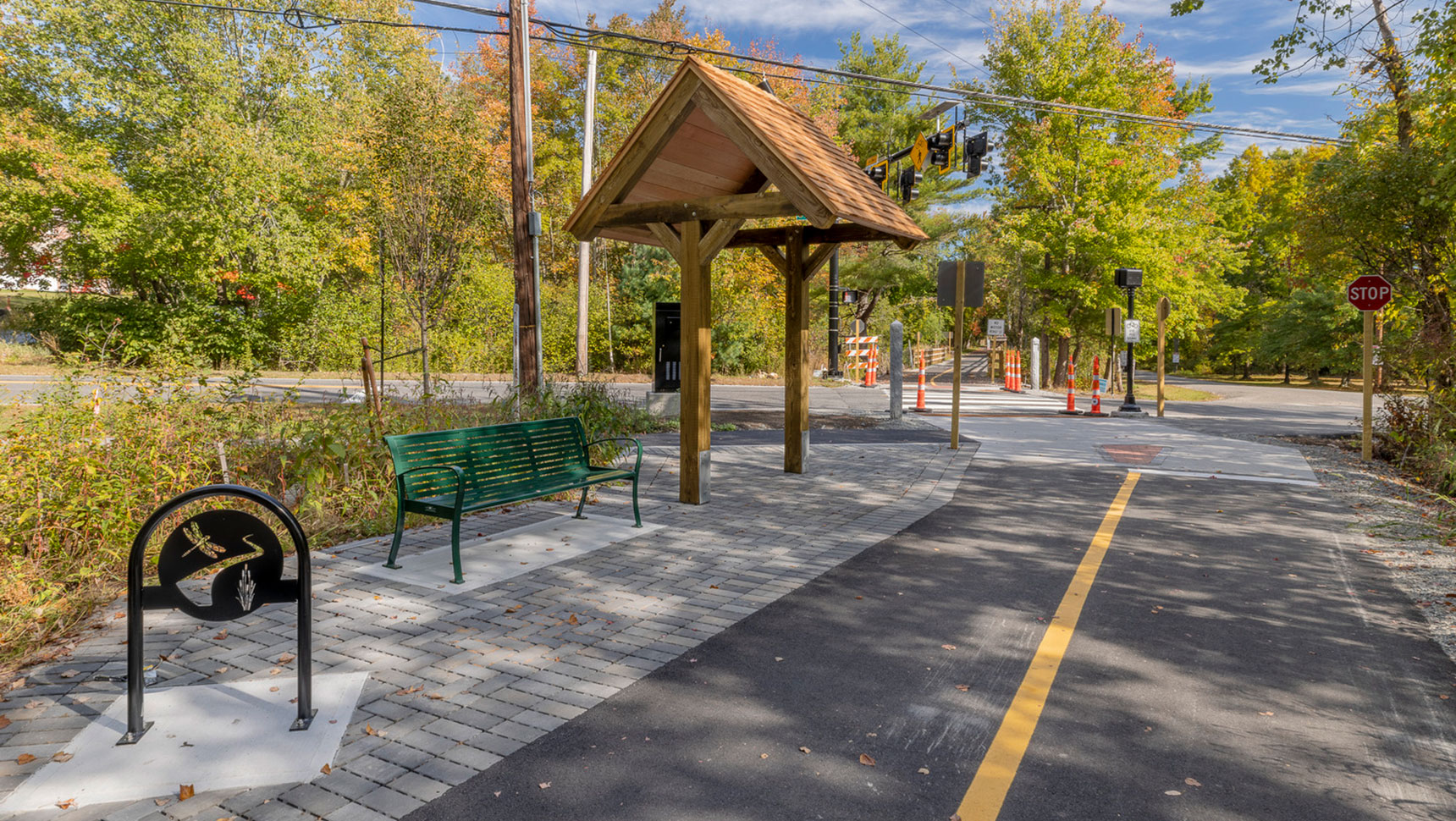
More than a trail, the intent was to create a linear park. As such, Fuss & O’Neill’s design included rest areas, hydration stations, parking facilities, wayfinding signage, mile markers, trail information boards, bike repair stations, and historical interpretation areas at points of interest along the trail.
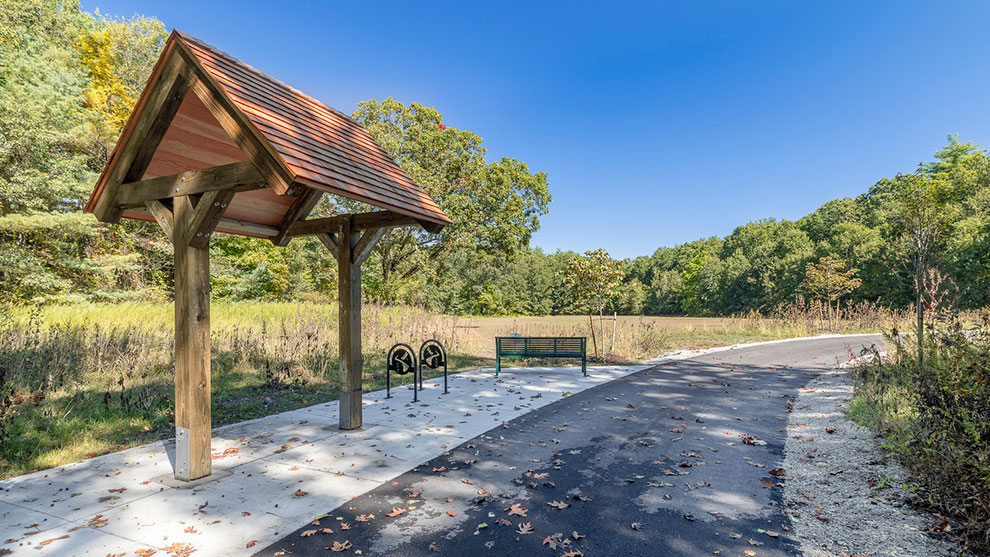
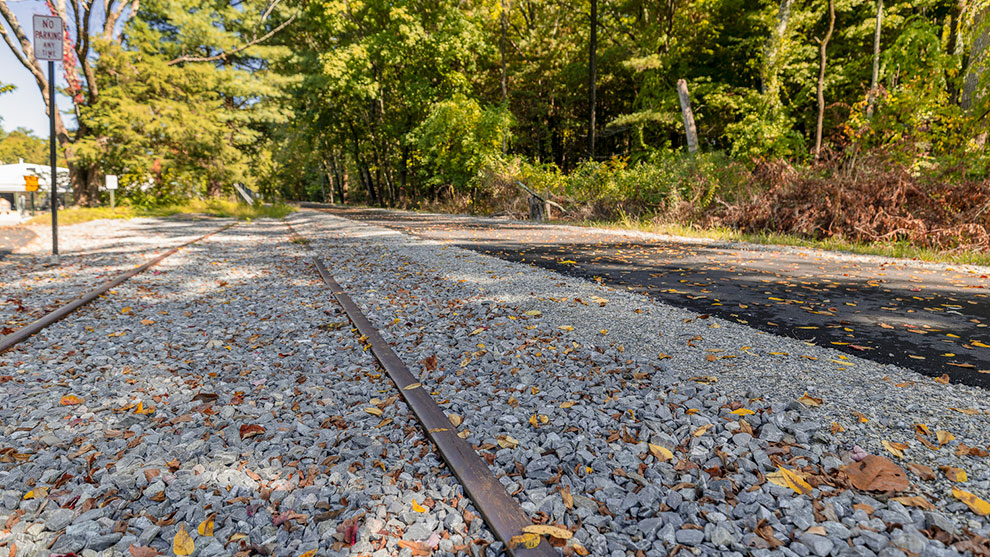
We paid homage to the historic nature of the site by refurbishing historic cattle crossings (bridges) that, in the early 20th century, allowed farmers to move livestock under the railroad. We repurposed historic granite stones from Pantry Brook Bridge as scour protection under a new bridge for the design year stream flows. The stones were also used as sitting and climbing play structures for children on the trail fringe near Pantry Brook. Old steel rails near the major corridor rest area/user hub at Hudson Road were re-set to highlight the significance of the rail-road siding in the Sudbury Historic District.

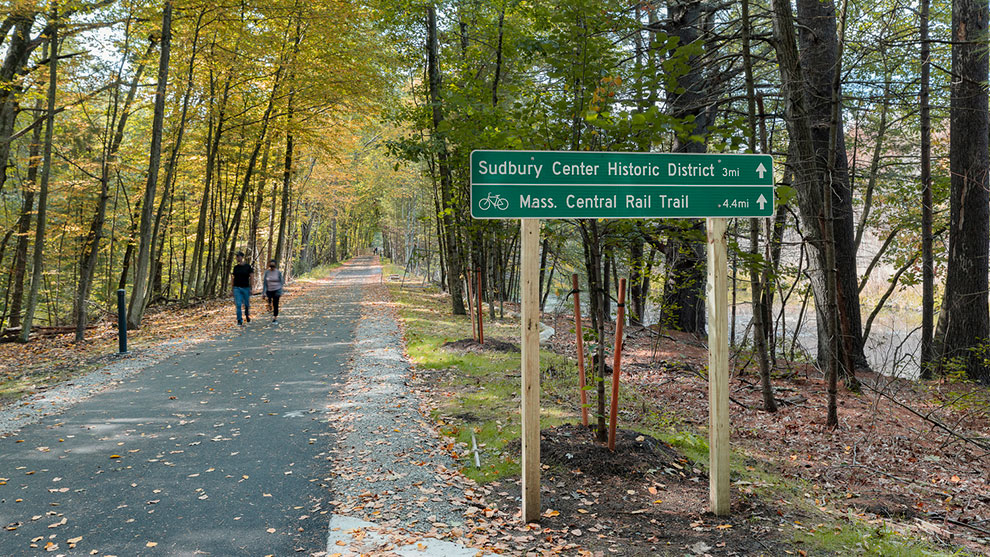
Fuss & O’Neill provided design and construction administration services in accordance with MassDOT project development processes, including the preparation of design plans, environmental permits, project special provisions, construction cost estimates, right-of-way easement plans, and bidding documents. The scope of work included significant municipal and abutter coordination to ensure a robust public process and stakeholder engagement. Additionally, our services included structural engineering, hazardous material management, stormwater modeling, wetland replication, and stream restoration.
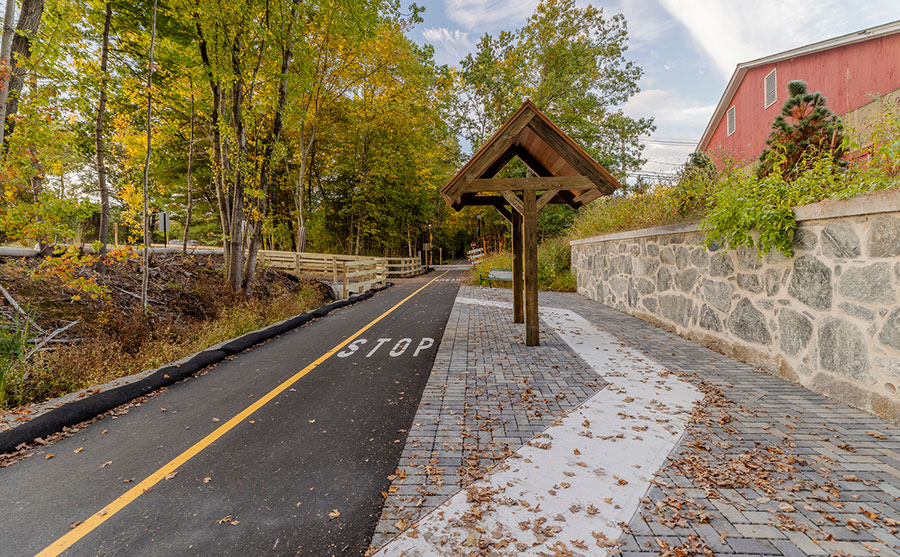
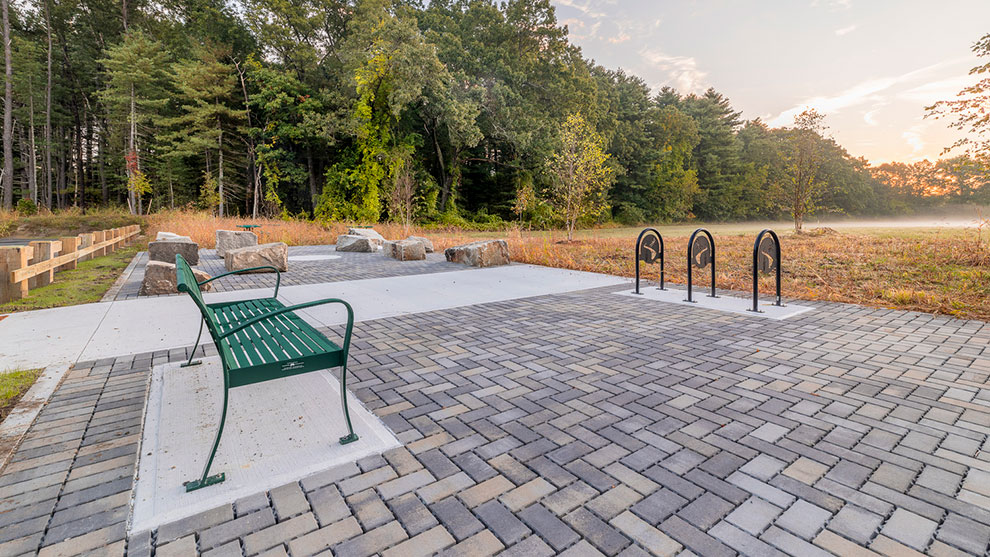
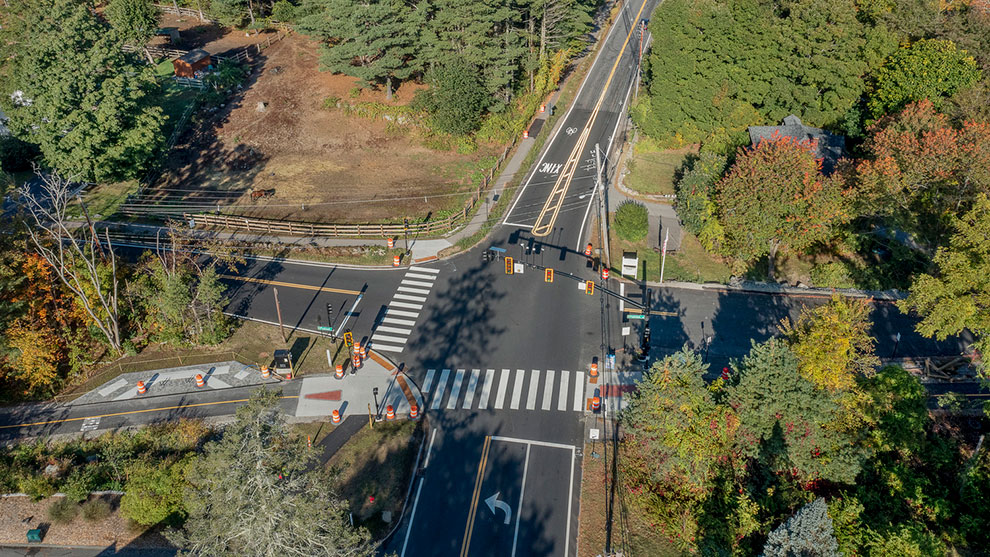
Our traffic and transportation engineers provided safety solutions for multimodal users, as this section of the BFRT crosses seven roads (at-grade crossings): Codjer Lane, Old Lancaster Road, Hudson Road (Route 27), Morse Road, Haynes Road, Pantry Road, and North Road (Route 117). Our design team upgraded the major arterial roadways of Route 27 (Hudson Road) and Route 117 (North Road). Route 27 required a new traffic signal installation in an already congested intersection, and Route 117 required installation of a Pedestrian Hybrid Beacon (HAWK Signal).

Our bridge engineers designed repair and replacement solutions for two structurally deficient stream-crossing structures with granite cut stone abutments.
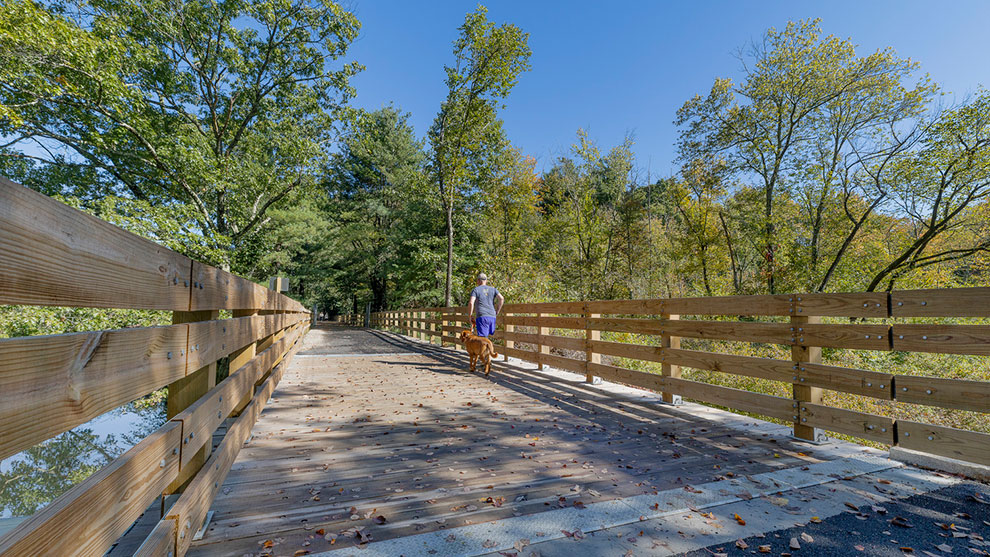
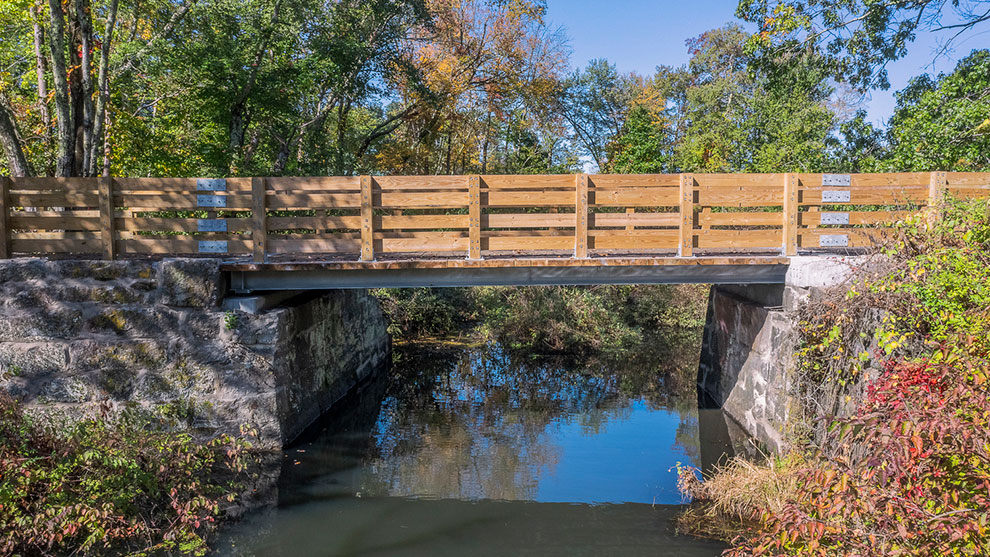
The Pantry Brook Bridge required demolition and removal of the existing superstructure, partial removal of the tops of the stone masonry wingwalls, removal of the concrete portion of the abutment backwall, construction of beam seat and wingwall caps, and a new superstructure. The existing structural steel was salvaged back to the Town, and the new superstructure consisted of seven rolled beams with a timber deck and timber bridge rail.
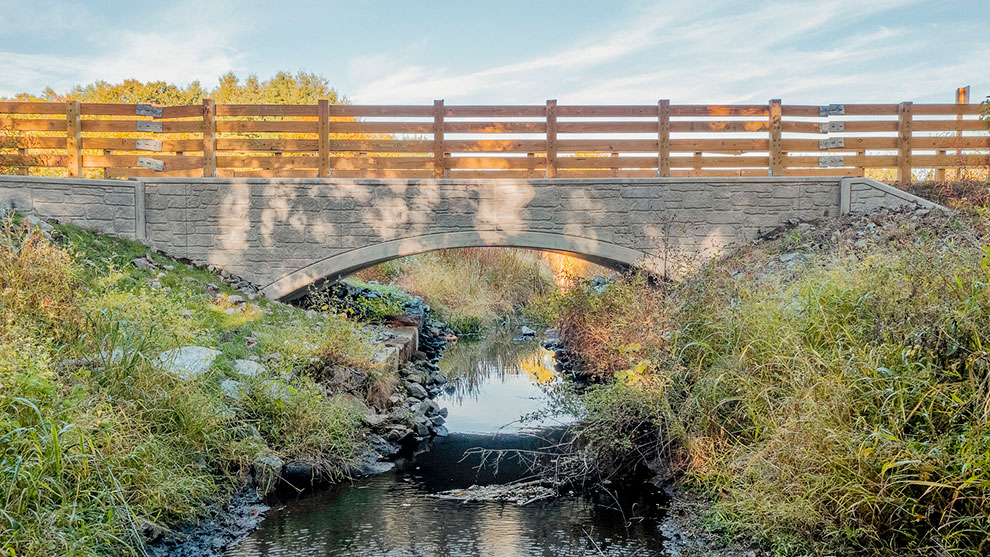
Bridge over the Pantry Brook
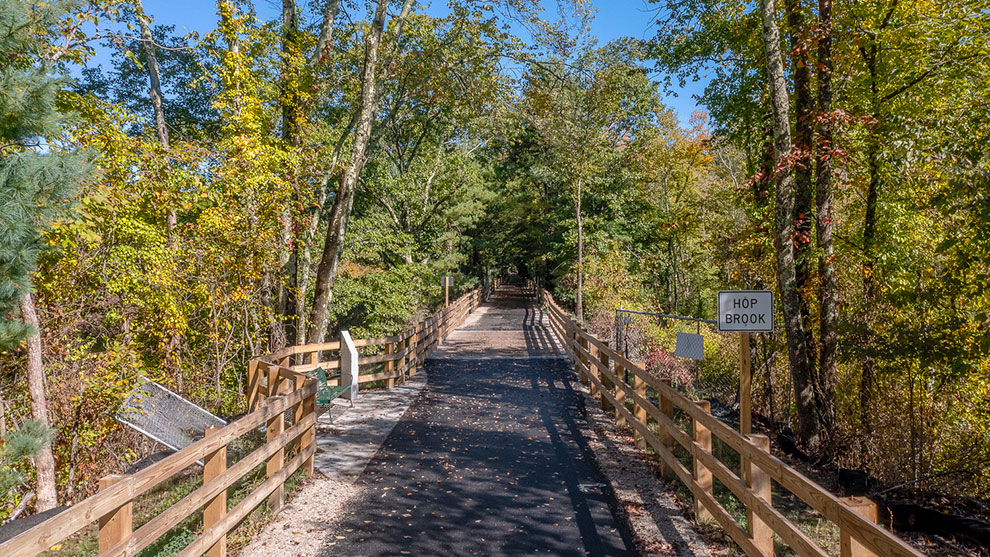
The Hop Brook Bridge required demolition and removal of the existing superstructure, partial removal of the tops of the stone masonry abutments and wingwalls, and construction of a replacement structure. Repairs, including repointing and rebuilding a collapsed portion of the existing stone masonry abutments and wingwalls, were included. The replacement structure is a buried precast concrete arch, headwall, and wingwalls on spread footings located behind the existing stone masonry abutments, with a timber bridge rail mounted to the headwall.
Bridge over the Hop Brook
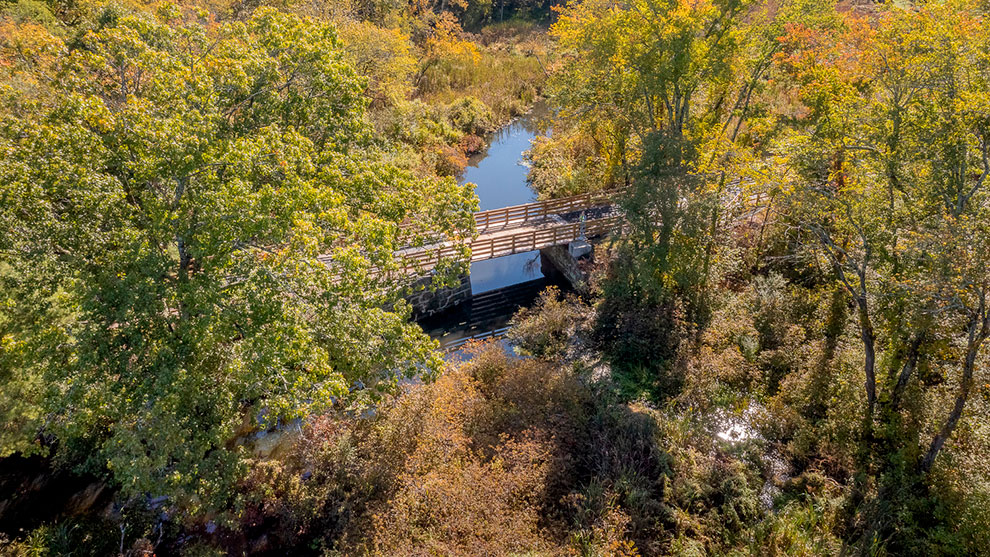
Bird's-eye view of the Hop Brook Bridge on the Bruce Freeman Trail
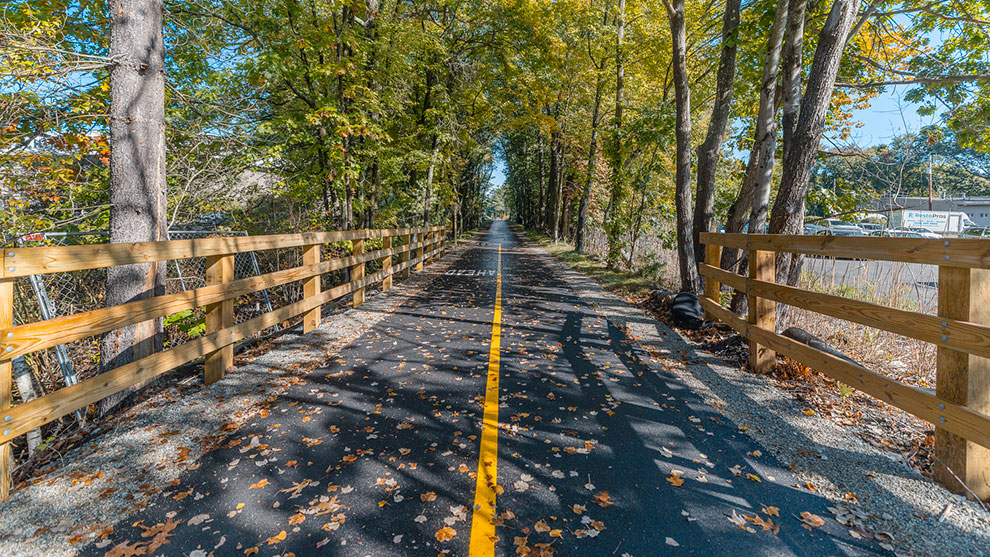
This 10-foot-wide paved path extends through the center of Town, from South Sudbury near Route 20, north to the Sudbury/Concord Town line, and takes pedestrians and cyclists through undisturbed natural areas full of wetlands, streams, vernal pools, and wildlife habitats. The trail provides additional opportunities for transportation,
passive/active recreation, and physical activity, while promoting community and economic growth through increased connectivity.
When the BFRT is fully complete, it will be one of the longest paved, fully accessible, nonmotorized
transportation corridors in New England, connecting gateway cities such as Lowell to urban and suburban employment hubs in Chelmsford and Framingham. Sudbury users will have a direct connection to the West Concord Train Station and service to Boston.